Deaf Communication Etiquette: Beyond Audism & Volume Control
The Silence of the “Well-Meaning” Wall
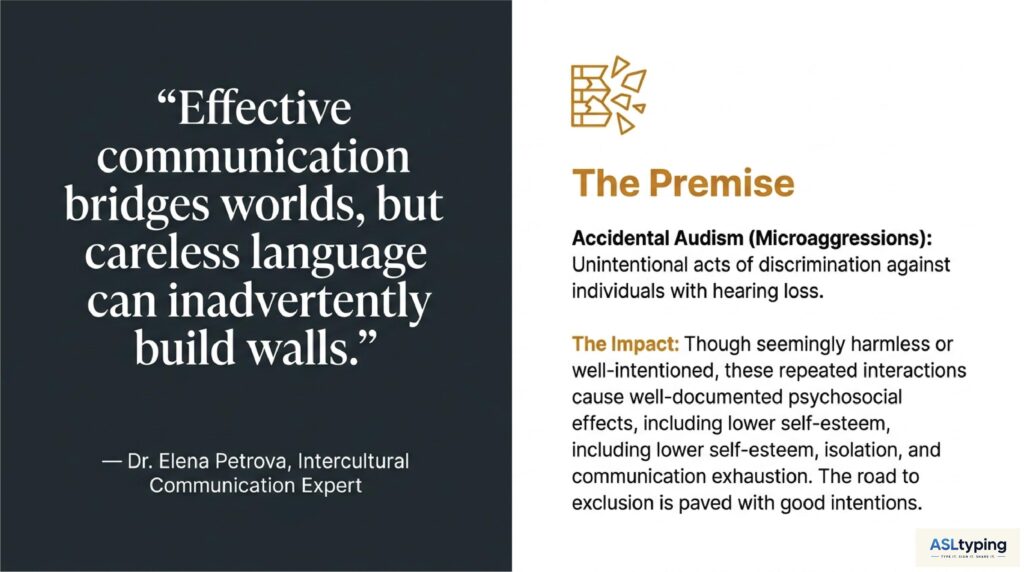
When a hearing person realizes they are speaking to someone who is deaf, a reflexive instinct often takes over: they begin to shout. This “loudness myth”—the belief that increasing volume equates to increasing understanding—is one of the most common barriers to effective communication. While most hearing people have good intentions and want to be polite, these reflexive habits inadvertently build walls rather than bridges.
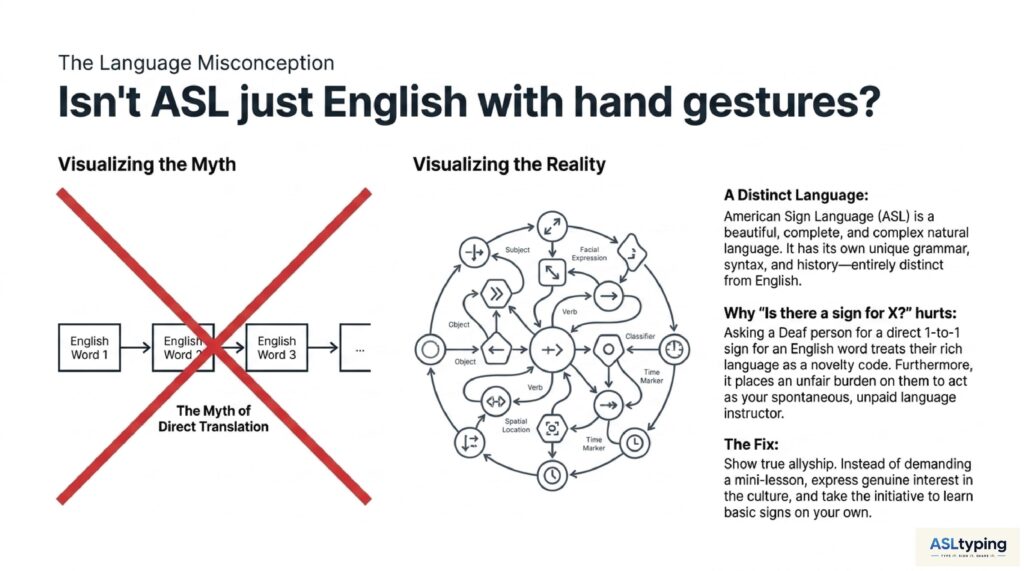
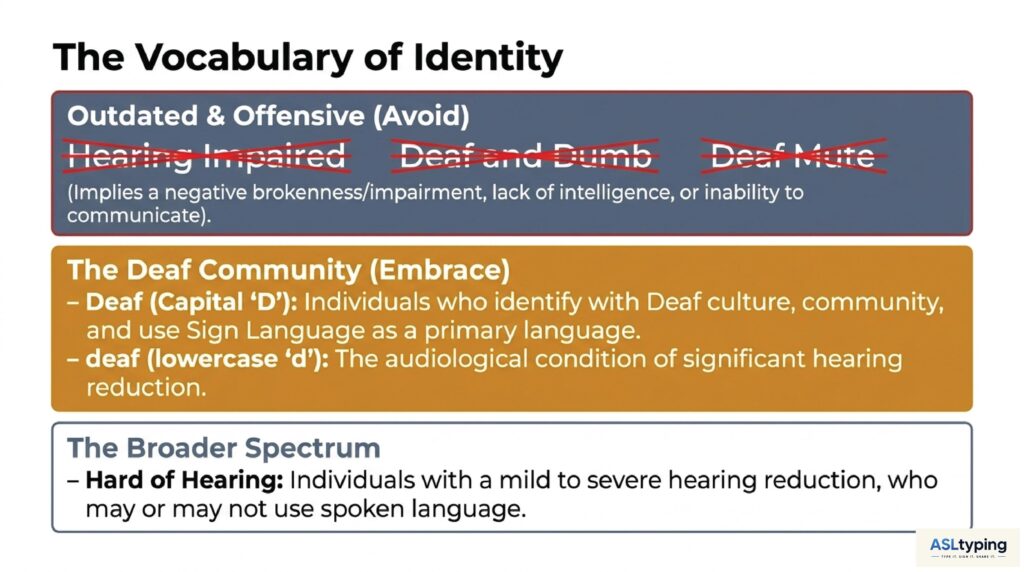
To communicate effectively, we must first understand a fundamental orthographic distinction. As a consultant in this field, I always begin with the “D/d” distinction: the lowercase deaf refers to the medical condition of hearing loss, while the uppercase Deaf refers to a vibrant cultural identity and a community with a shared language, unique history, and distinct values.
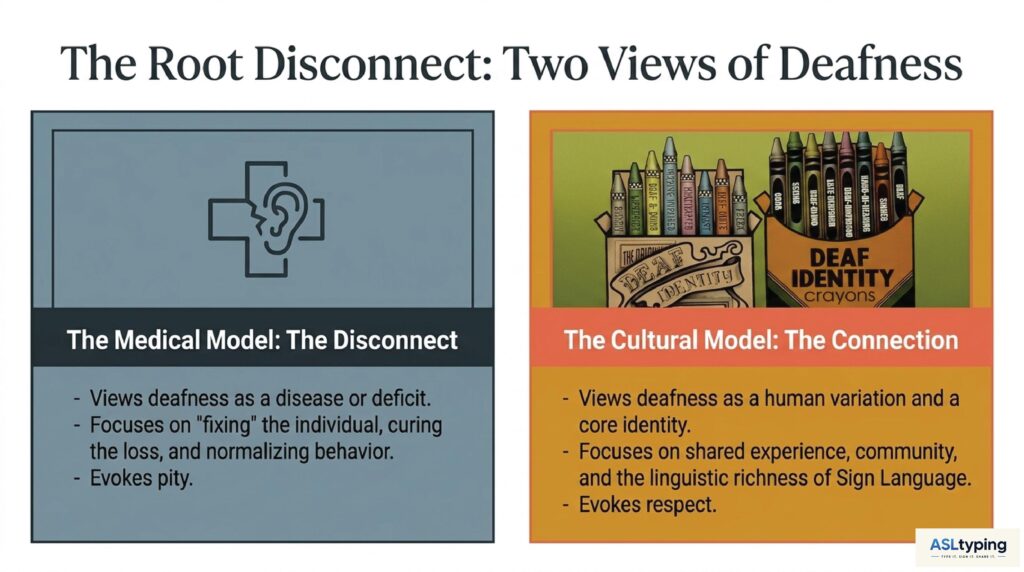
The medical model views deafness as a tragedy to be cured—a deficit in need of repair. In contrast, the cultural model recognizes it as a way of being. Moving toward genuine allyship requires shifting from a mindset of pity to one of respect, recognizing that “well-meaning” behaviors can often be the very tools of exclusion.
The “Never Mind” Erasure: Why These Two Words Are the Most Damaging
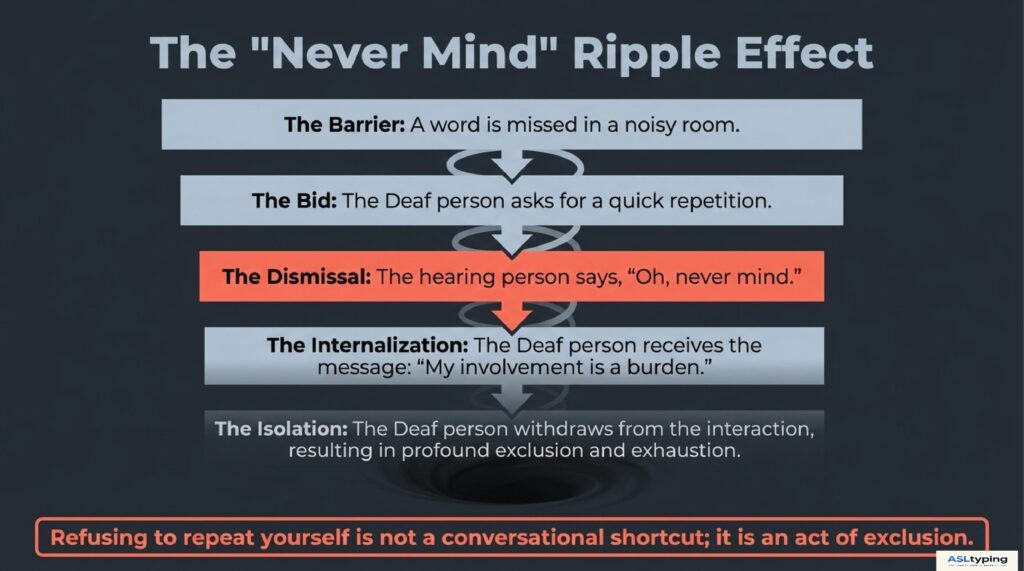
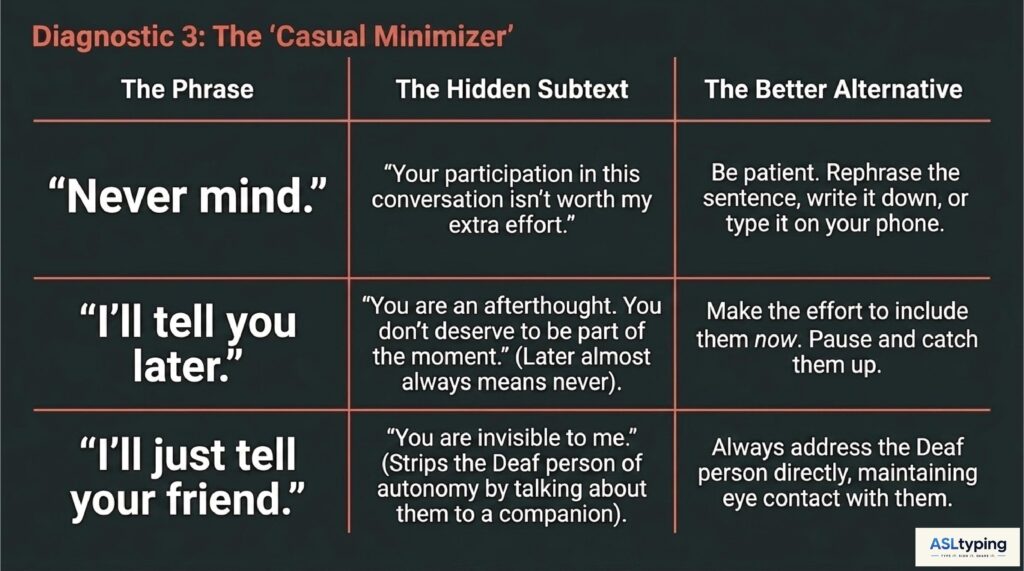
Perhaps the most universally frustrating experience for a Deaf or hard-of-hearing person is being told “Never mind” or “It doesn’t matter” when they ask for a repetition. While the hearing speaker may feel they are simply saving the other person from a “boring” or trivial comment, the impact is a profound act of erasure.
This phrase signals to the individual that they—and the conversation—are not worth the effort of rephrasing. It is a dismissal of their right to participate. As Charlie Swinbourne notes: “Because it makes us feel like, maybe, we don’t matter too much either.” Even if you were only mentioning that you feel “peckish,” excluding a Deaf person from that mundane moment strips them of the opportunity for natural connection and equality.
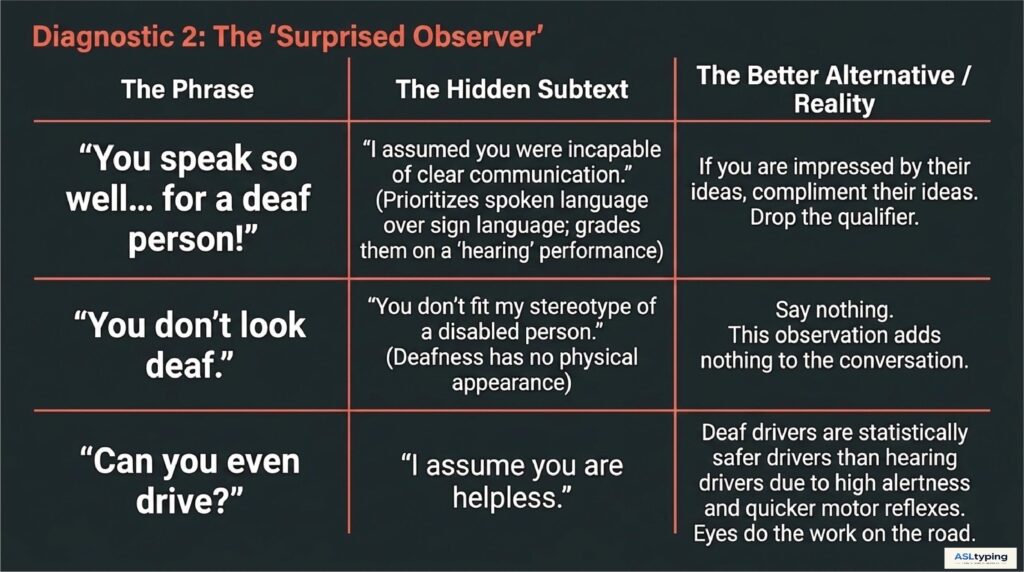
The Backhanded Compliment: “You Speak So Well for a Deaf Person”
Praising a Deaf person’s speech may seem like a kind gesture, but it is often rooted in audism. As defined by sociolinguist Professor Laura Kim, audism is the belief that “hearing and speaking are superior” forms of communication. By offering this praise, the speaker reinforces the bias that the “normal” or “correct” state for a person is to be as close to a hearing person as possible.
Commentary on a person’s speech shifts the focus from the content of their message to a “performance” of hearing expectations. This performance is physically and mentally exhausting. According to experts in Communication Sciences, the “listening effort” required to navigate a hearing-centric world is a significant cognitive load. Adding the qualifier “for a deaf person” transforms the remark into a degrading assessment, implying surprise that a deaf individual can deviate from a prejudiced expectation of being less capable.
The “Inspiration” Trap: Resisting the Urge to Call Ordinary Life “Brave”
It is a common pitfall to label Deaf people as “brave” or “inspirational” for performing mundane tasks like driving, grocery shopping, or working. While intended as a compliment, this perspective is patronizing.
“These comments often stem from a hearing person’s limited understanding of disability, viewing the deaf individual’s existence through a lens of struggle and overcoming, rather than as a normal, lived experience.” — dp-ho Source
Take the example of driving. Many hearing people ask if it is safe for a deaf person to be on the road. However, evidence suggests that deaf drivers are statistically safer than hearing drivers; they are not distracted by auditory noise and possess high visual alertness and quicker motor reflexes. Labeling someone “brave” for driving a car diminishes their autonomy and treats their ordinary life as a spectacle of “overcoming” a disability rather than acknowledging their inherent competence.
The Shouting Paradox: Why Louder Often Means Less Clear
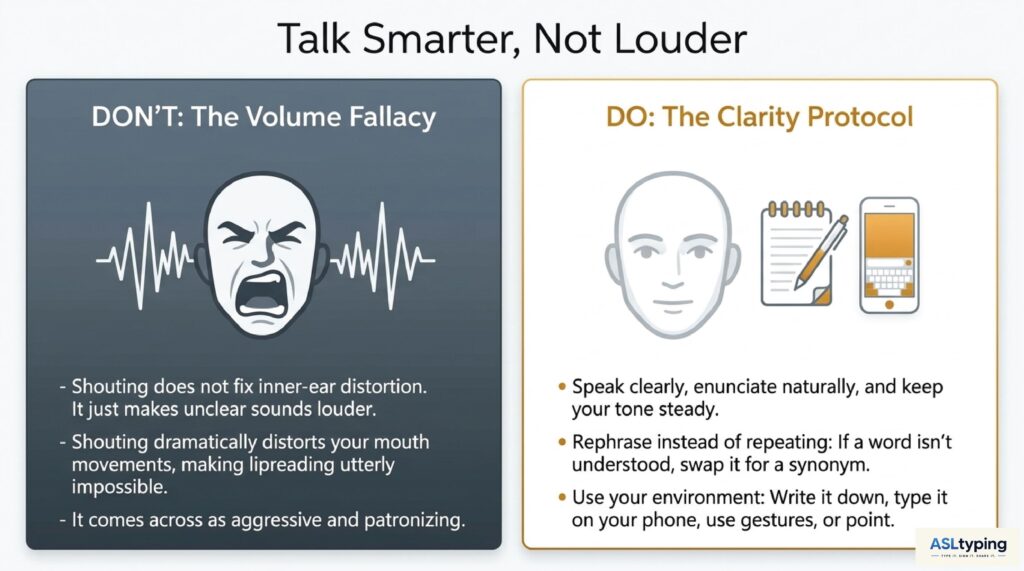
Shouting is not only ineffective for someone who is profoundly Deaf, but it can also be physically painful for those using hearing aids. These devices amplify sounds to a set level; when a speaker shouts, they can “turn things up to 11,” causing extreme discomfort and distortion.
Furthermore, shouting ruins the opportunity for lipreading. Elisa Nuevo Vallín uses the “carnival mirror” analogy: shouting exaggerates and distorts mouth movements, making the speaker’s face much harder to read. Instead of increasing volume, the most effective approach is to maintain a natural pace, use clear enunciation, and ensure your face is well-lit and visible.
 Use the free tool here: ASL Gloss Translator.
The Lipreading Myth: Why “Just Read My Lips” Isn’t a Solution
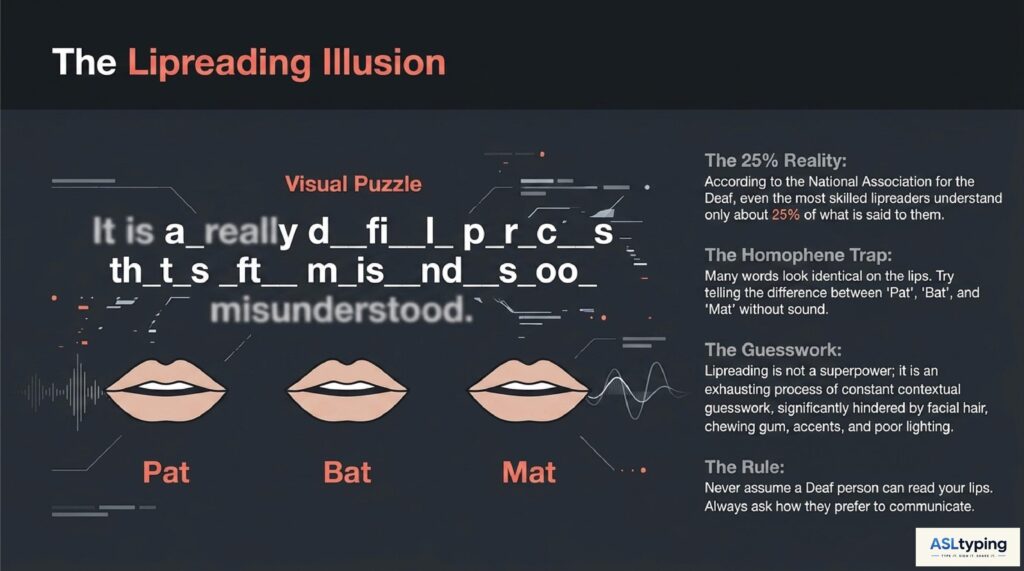
There is a persistent myth that lipreading is a “superpower” that allows for 100% understanding. In reality, the National Association for the Deaf (NAD) states that even the most skilled lipreaders only catch approximately 25% of what is said.
This is because many speech sounds are visually indistinguishable. The difficulty is centered on “homophenes”—words that look identical on the lips, such as “pat,” “bat,” and “mat.” Because of these linguistic hurdles, very few Deaf or hard-of-hearing people rely on lipreading alone for exchanges of important information. It is a high-effort “supplement” that requires immense guesswork, not a primary communication tool.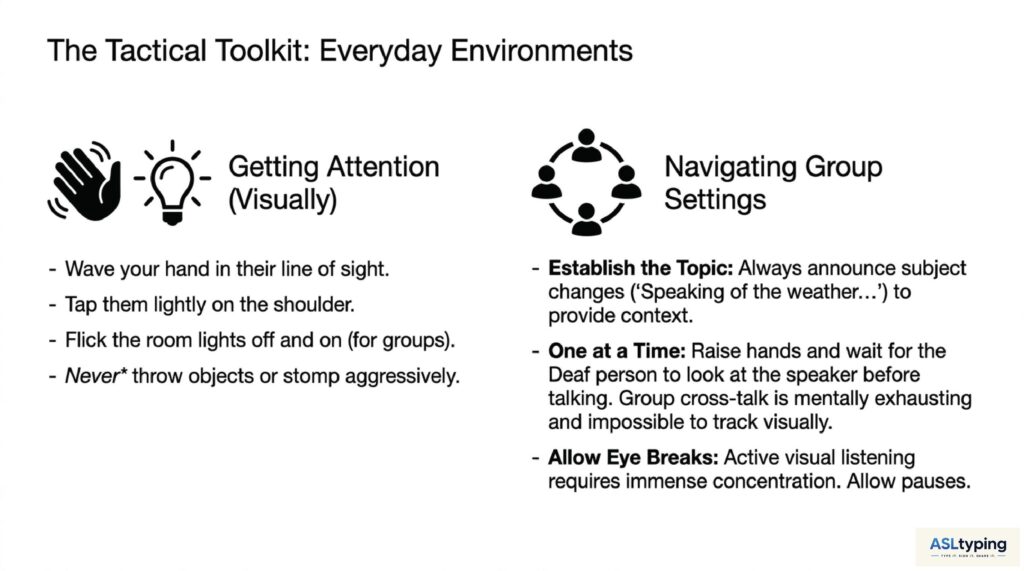
Bypassing the Person: “Tell Her I Said…”
A frequent act of audism occurs when a hearing person speaks to an interpreter or a hearing companion rather than the Deaf person themselves. This behavior renders the person invisible and strips them of their agency in the interaction. As advocate Dr. Robert Johnson notes, this is a blatant violation of a person’s right to direct participation.
To ensure an inclusive environment, follow these professional instructions:
- Maintain eye contact with the Deaf person, not the interpreter.
- Use “You” instead of “Him/Her” (e.g., “Would you like a coffee?” instead of “Ask her if she wants a coffee”).
- Include the Deaf person in the group flow, ensuring they are addressed directly as a full participant.
The “I’m Sorry” Reflex: Framing a Culture as a Tragedy
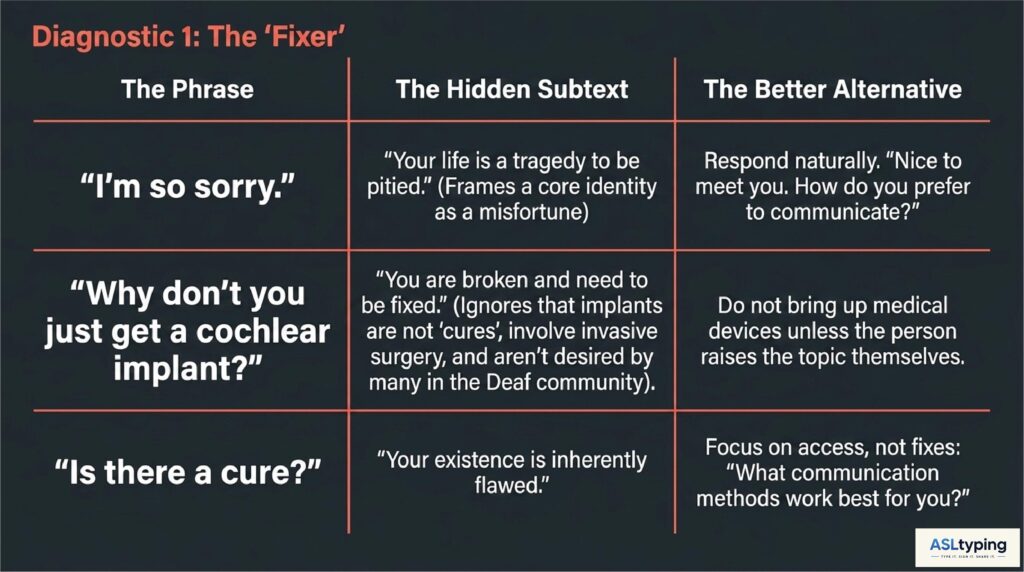
When hearing people learn that someone is deaf, many instinctively respond with “I’m sorry.” This reflects the medical model, which frames hearing loss as a deficit or something lost that must be mourned. However, most Deaf people do not feel sorry for themselves and do not view their identity as a misfortune.
To many, deafness is a source of cultural pride—a neutral characteristic no different from any other human variation. Daniel, who grew up in the Deaf community, explains the frustration: “When people say ‘I’m sorry,’ it feels like they’re mourning something that isn’t lost. I’m not sad about being deaf; it’s just who I am.” Moving away from this reflex allows for a relationship based on reality rather than pity.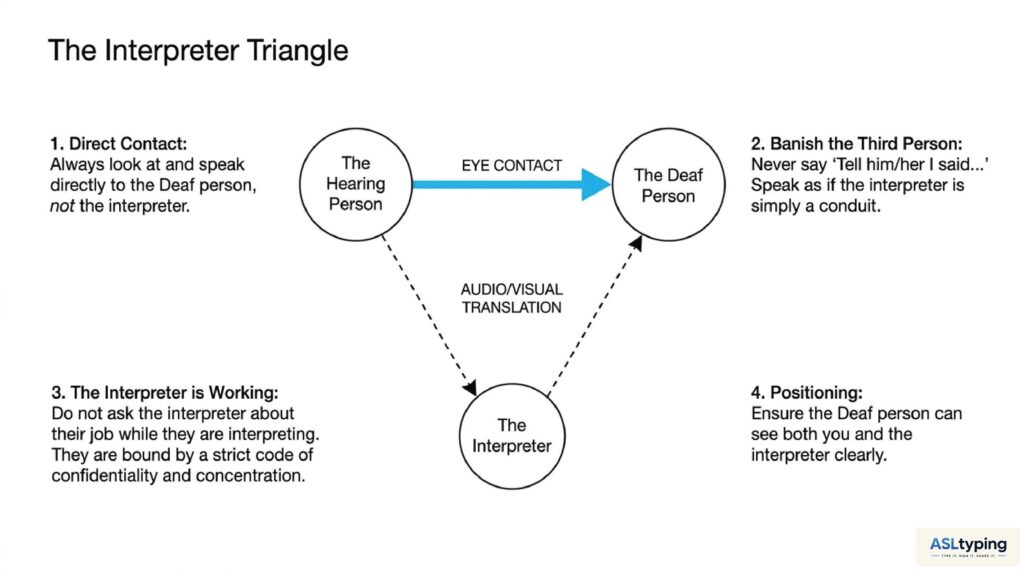
Conclusion: Moving Toward “Total Communication”
Effective communication is not about finding a single “fix” like a volume control; it is about equality, mutuality, and collaboration. To be a genuine ally, we must change how we think about the Deaf experience, moving away from a mindset of “helping” toward one of shared communication. We must prioritize “meeting the person where they are.”
Adopting “Total Communication” is the most effective way to bridge the gap. This involves using a collaborative mix of tools tailored to the individual:
- Clear speech and natural enunciation.
- Signs and gestures (even basic signs like “thank you” make a big impression).
- Writing or typing on a phone to ensure clarity.
- Visual aids and expressive facial expressions.
By remaining patient and creative, we can move past well-meaning awkwardness. Are we willing to change how we think about hearing to ensure no one is excluded from the conversation?
From “Helping” to Human Connection
True communication is never about a single adjustment like raising your voice; it is an act of mutual respect, patience, and equity. When we strip away the “loudness myth” and the reflex of pity, we find a vibrant community that doesn’t need to be “fixed,” but simply needs to be included. Moving beyond well-meaning barriers requires us to stop viewing deafness through a lens of medical deficit and start seeing it as a unique cultural experience. By adopting a “Total Communication” mindset, we ensure that the bridge we build is one that everyone can walk across with dignity.
Use the free tool here: ASL Gloss Translator.
Be an Ally, Not Just an Observer
Awareness is the first step, but inclusion requires action. Here is how you can start dismantling the walls of exclusion today:
- Commit to Clarity, Not Volume: Next time you interact with a Deaf or hard-of-hearing friend, focus on maintaining eye contact, keeping your face visible, and speaking at a natural pace.
- Strike “Never Mind” From Your Vocabulary: If you aren’t understood the first time, rephrase or write it down. Show the person that their inclusion in the conversation is worth the extra effort.
- Learn the Basics: Take ten minutes to learn basic signs for “Thank you,” “Please,” or “How are you?” These small gestures signal respect for Deaf culture and bridge the initial gap of awkwardness.
- Direct the Dialogue: Always speak directly to the person, not their interpreter or companion. Acknowledge their agency and presence as a full participant in the world around you.
The silence of the “well-meaning” wall only breaks when we choose to listen with more than just our ears. Will you make the choice to change your habits and prioritize genuine connection today?
Use the free tool here: ASL Gloss Translator.
informatively and nice