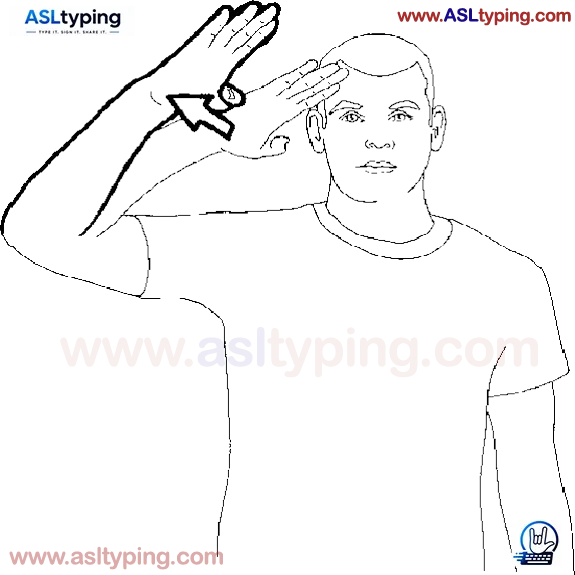
HELLO
Opening a conversationA familiar greeting and a useful starting point for beginner social interaction.

Learn useful American Sign Language greetings and social vocabulary for starting a conversation, responding politely, meeting people, showing appreciation, and saying goodbye. Use the ten picture cards as visual anchors, then read the explanations to understand why real ASL communication involves much more than matching one English phrase to one picture.
Instead of loading this page with dozens of images, this lesson uses ten carefully chosen visual vocabulary items. The smaller set keeps the page lighter and gives you space to actually study each concept rather than scrolling past it.
A familiar greeting and a useful starting point for beginner social interaction.
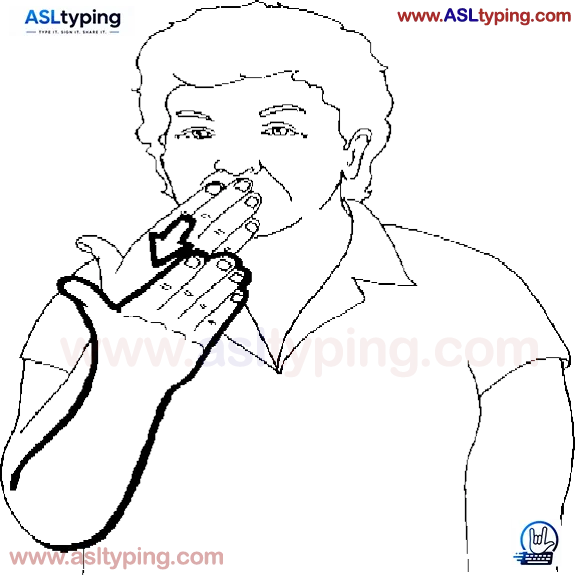
Useful when responding positively and when building familiar greeting-related ideas.
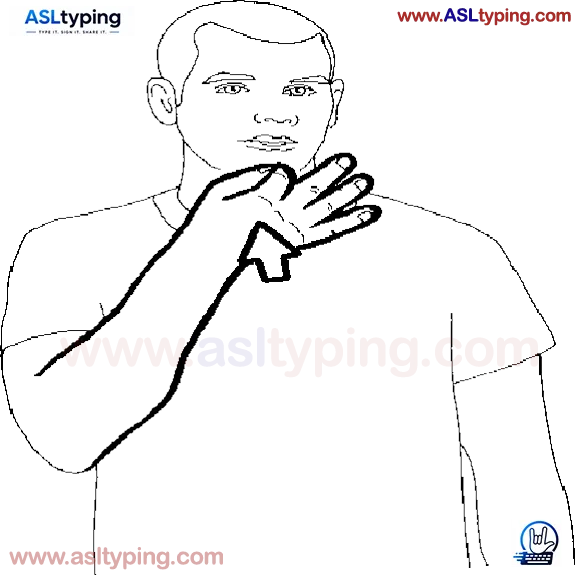
Combine time concepts with appropriate visual instruction when learning greetings used in the morning.
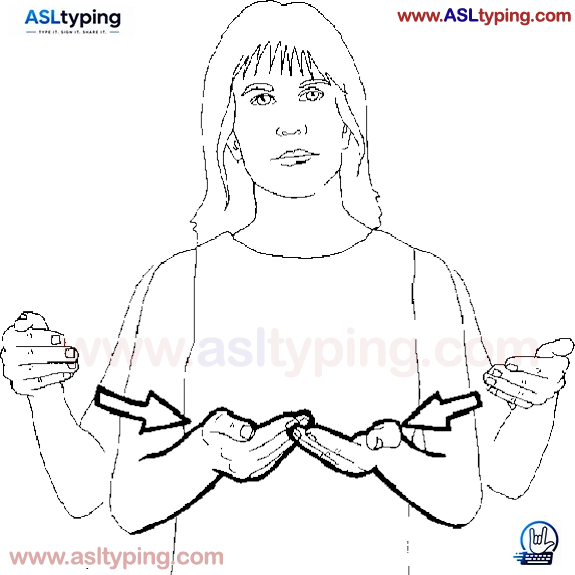
A warm social concept for greeting or acknowledging someone.
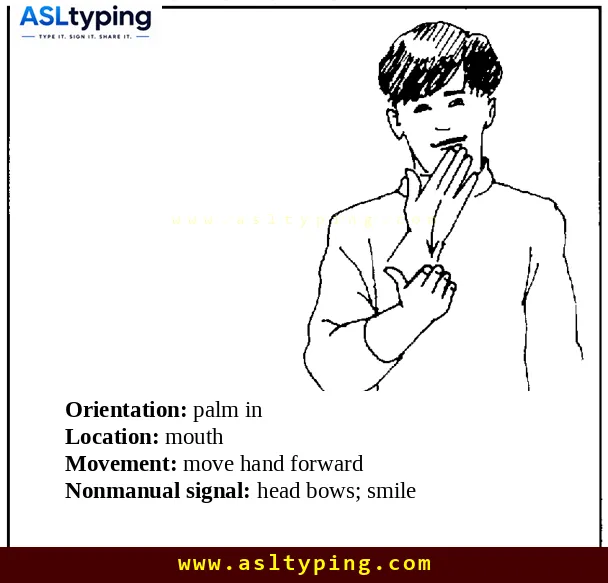
A high-value social expression for everyday interaction.
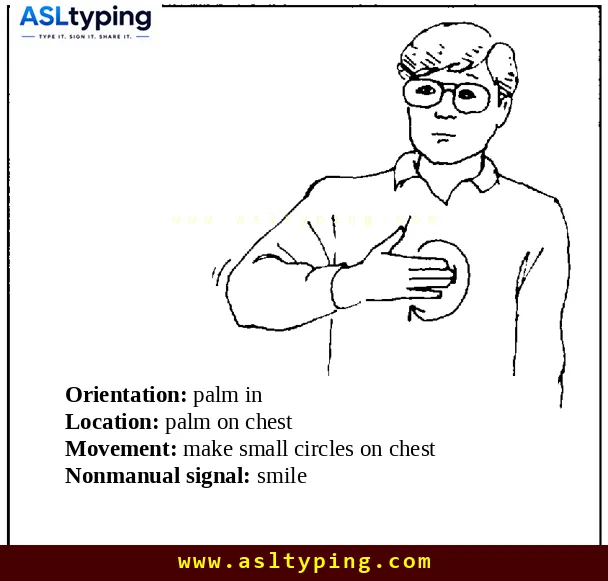
Useful when learning how requests and social politeness are expressed.

A practical social expression that learners often want early.
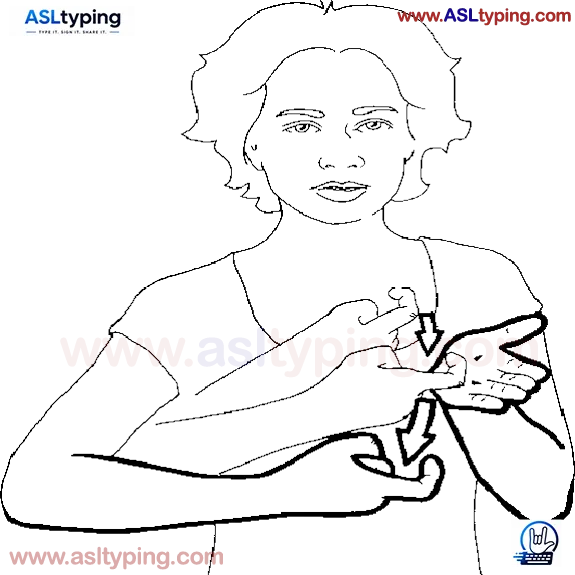
Useful vocabulary when learning ways to respond to questions about how you are doing.
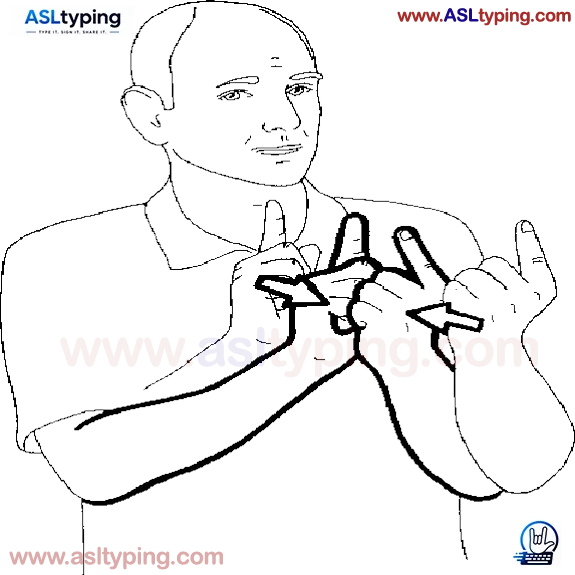
Helpful when practicing introductions and talking about meeting someone.
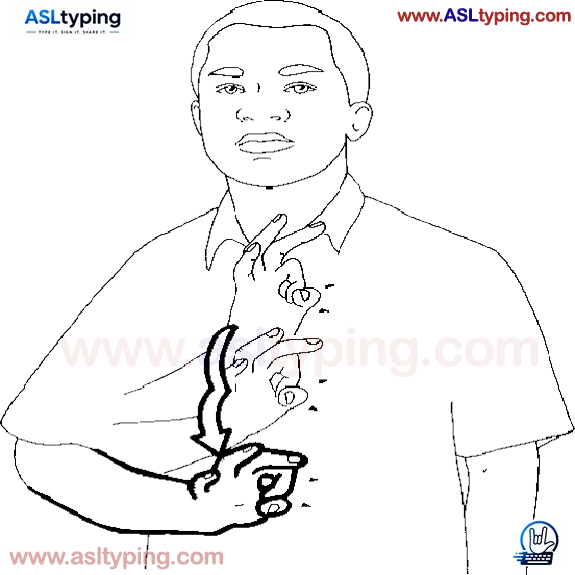
A simple closing expression for ending an interaction.
For many beginners, greetings are the first part of a new language that feels immediately useful. You can imagine meeting someone, introducing yourself, thanking a person, apologizing, or ending a conversation. That familiarity makes greeting vocabulary a comfortable entry point into ASL. However, there is an important difference between learning a few useful signs and learning how a natural ASL conversation works.
ASL is not English placed on the hands. A phrase that contains three or four English words does not necessarily require three or four signs in the same order. Context can make information unnecessary, and ASL uses facial expression, head movement, body position, signing space, and other non-manual features as meaningful parts of communication. That is why this page avoids presenting a rigid “English phrase = exact ASL sentence” formula.
The picture cards are best used as anchors. Learn to recognize HELLO, THANK YOU, PLEASE, SORRY, and the other concepts, but then move beyond recognition. Watch how signs move. Notice how a signer uses eye gaze and facial expression. Observe how a greeting changes depending on whether the interaction is casual, formal, enthusiastic, brief, or part of a longer conversation.
Begin with familiar social vocabulary such as HELLO. In real interaction, eye contact, attention-getting conventions, facial expression, and context are also important. Do not treat the English word “hello” as the entire lesson.
GOOD and FINE are useful response concepts. When you later study questions, learn the appropriate non-manual grammar rather than simply arranging English words in English order.
MEET gives you useful vocabulary for introductions. Names are often fingerspelled, so this is a natural point to combine vocabulary practice with the ASL alphabet and fingerspelling.
THANK YOU is one of the social expressions many learners want early. Practice the complete movement from a reliable visual demonstration instead of memorizing only the still frame.
PLEASE is useful vocabulary, but politeness in any language is larger than one word. Situation, facial expression, relationship, and the way a request is formed all matter.
BYE provides a simple closing concept. As your vocabulary grows, you can learn additional ways people naturally close conversations and refer to seeing one another later.
One reason text-only ASL lists can be misleading is that the hands are not the whole language. Facial expression and other non-manual signals can contribute emotion, emphasis, grammatical marking, and conversational information. A friendly greeting normally looks different from a worried question or an urgent request, even if some vocabulary overlaps.
This matters especially when learners move from isolated vocabulary into questions. For example, knowing vocabulary associated with a greeting does not automatically teach the grammar of a Yes/No question or a Wh-question. Your ASL grammar study should include the relevant facial and head movements instead of focusing only on word order.
When practicing in a mirror or recording yourself for private review, look at your entire upper body rather than only your hands. Ask whether your face matches the communicative purpose. Are you greeting someone warmly? Asking something? Showing uncertainty? The goal is not exaggerated acting; it is learning to pay attention to visual information beyond the hands.
Meeting someone often leads naturally to names, and names are one of the most practical reasons to learn fingerspelling. Rather than inventing a sign for every name, beginners should become comfortable with the manual alphabet and with recognizing fingerspelled sequences. This is also where ASLTyping's fingerspelling tools can complement the vocabulary page.
Start with your own name because it is meaningful and easy to repeat. Then practice the names of family members, friends, places, or familiar brands. Accuracy matters more than speed at first. Keep your hand position comfortable, form each letter clearly, and gradually work toward smoother transitions instead of bouncing or producing each letter as a disconnected pose.
The line above uses the site's CuteASL-style font only as a playful visual memory element. It is not a replacement for natural fingerspelling or the sign vocabulary shown in the cards. A font can make practice engaging, but human signing includes movement and timing that a static typeface cannot reproduce.
Look at each picture and recall the concept. Repeat until you no longer need to read every label first.
Read the English concept, hide the picture, and try to remember what you studied before checking yourself.
Use visual instruction to study movement, orientation, location, facial expression, and natural production.
Put the vocabulary into realistic social situations while continuing to learn appropriate ASL grammar.
Repeat this process over several days. Short, spaced review sessions are usually more useful for long-term recall than looking at the same cards repeatedly in one sitting. If a word feels easy, spend less time on it. If another keeps disappearing from memory, bring it back more often.
Searches such as “how to say hello in sign language” or “how to say thank you in ASL” are natural beginner questions. The risk appears when a learner assumes every English sentence has one permanent ASL version created by replacing each English word with a sign. Languages encode meaning differently, and ASL is a complete visual language with its own structures.
For that reason, this page labels the pictures as vocabulary concepts and gives learning guidance around them. It does not promise that combining the card labels in English order will produce natural ASL. When you want to explore sentence structure, use the grammar resources on ASLTyping and treat the ASL Gloss Translator as a practice aid rather than an automatic authority on every possible sentence.
Also remember that sign variation exists. You may encounter different forms associated with region, age, community, context, or individual signing history. Seeing a different version is a reason to investigate and compare reliable visual sources, not necessarily proof that one person is signing incorrectly.
Memorizing only the English label. If you can read “THANK YOU” but cannot recall the visual form without seeing the card, the vocabulary is not yet secure. Reverse the practice direction frequently.
Copying only the handshape. A handshape is one component. Movement, orientation, location and non-manual information may be essential to producing or understanding the sign accurately.
Trying to sign too fast. Speed is not the first goal. Clear, controlled production gives you a stronger foundation. Fluency develops through repeated meaningful practice.
Assuming ASL follows English grammar. A vocabulary list is not a grammar lesson. Continue from this page into sentence structure, question formation, time expressions, and other ASL grammar topics.
Ignoring real interaction. Tools, pictures, fonts and games are useful for practice, but language grows through people. Whenever possible, complement independent study with high-quality visual teaching and opportunities to learn from Deaf signers and the broader signing community.
After studying the greeting vocabulary, try the games and use your scoreboard as a simple motivation tool. A score is not a measure of ASL fluency; it is just one way to make repeated review more engaging.
Start with a small set of useful vocabulary, study the complete movement through visual instruction, practice recall instead of recognition alone, and gradually combine vocabulary study with ASL grammar and real interaction.
Pictures are helpful memory aids, but a still image cannot fully show movement, timing, palm orientation, direction, or facial information. Use the pictures as a starting point and reinforce them with visual demonstrations.
No. ASL is a language with its own visual-spatial and grammatical patterns. Learning individual vocabulary does not mean English word order should be transferred directly into ASL.
Names are a common reason to use fingerspelling, so learning the manual alphabet helps beginners introduce themselves and recognize other people's names.
Yes. Variation can occur across regions, generations, communities, contexts, and signers. Compare reliable visual sources and observe natural usage rather than assuming every difference is an error.
Go back to any vocabulary set that still feels difficult, explore the Picture Dictionary for more words, and keep building grammar, fingerspelling, recognition, and real visual-language skills.
Explore More Signs →